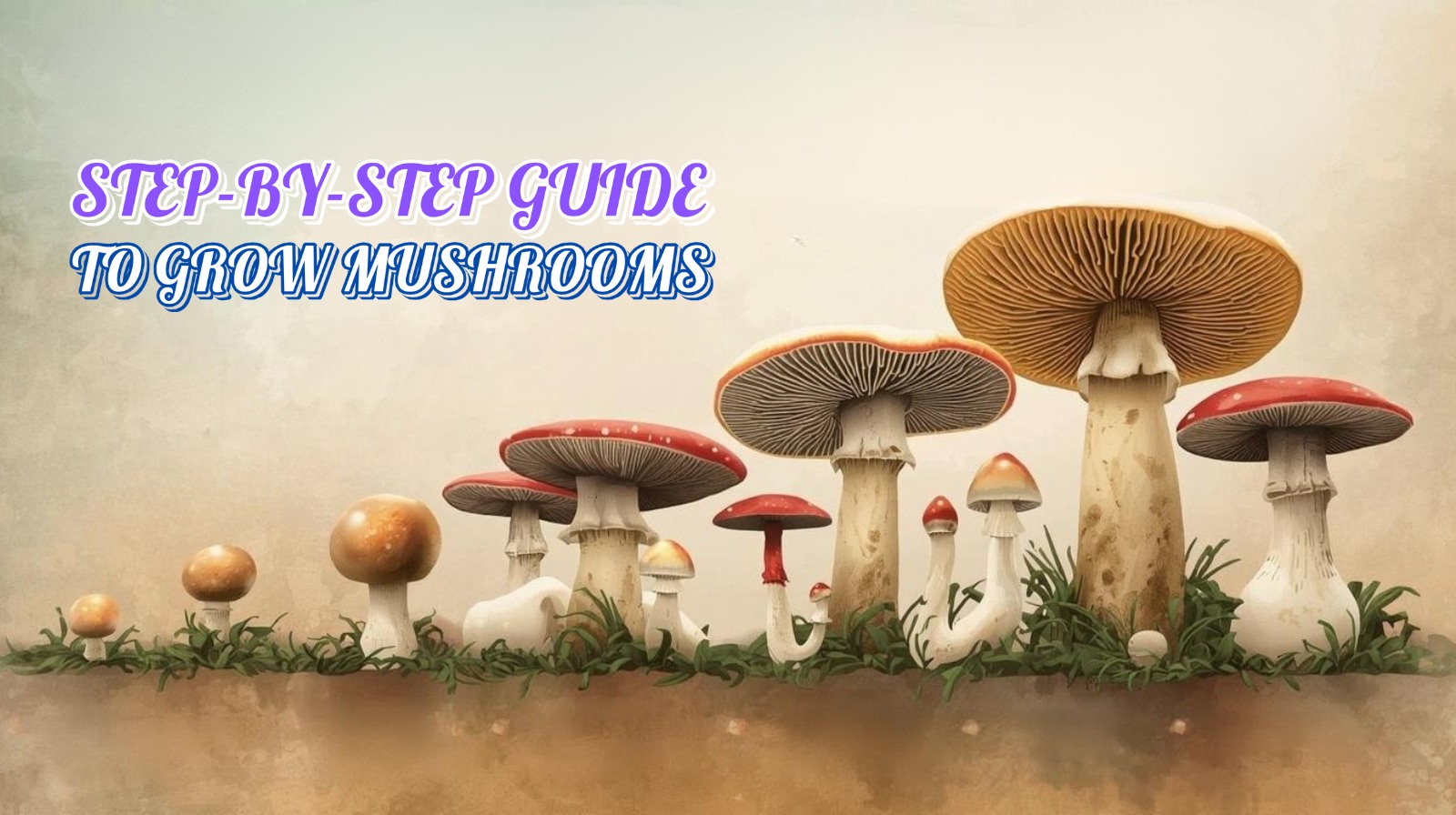
What Are Mushrooms?
Mushrooms are a type of fungi that grow by breaking down organic matter such as straw, wood and compost. Unlike plants, mushrooms do not require sunlight for growth because they do not photosynthesize. Instead, they absorb nutrients from their substrate through a network of thread-like structures called mycelium.
How Mushrooms Grow
Mushroom cultivation involves several key stages that are relatively straightforward once you understand the basics. Understanding the lifecycle and requirements of mushrooms helps in creating the right environment for successful cultivation.
Popular Mushroom Varieties
- Button Mushroom (Agaricus bisporus): The most commonly cultivated mushroom worldwide. It has a mild taste and firm texture, making it popular in many recipes.
- Oyster Mushroom (Pleurotus ostreatus): Known for rapid growth and adaptability to different substrates like straw and sawdust.
- Shiitake Mushroom (Lentinula edodes): Valued for its rich, smoky flavour and medicinal properties, often grown on hardwood logs.
- Milky Mushroom (Calocybe indica): Thrives in tropical climates and grows quickly, suitable for regions with warm temperatures.
Business Prospects
Mushroom farming is profitable because it demands little space and investment yet yields crops in a short time. Mushrooms have growing market demand fresh and processed, supplying restaurants, retailers and health food sectors. The demand for both fresh and processed mushrooms is rising rapidly in local and international markets, including restaurants, supermarkets and health food industries. Moreover, mushrooms can be grown on agricultural waste, contributing to environmental sustainability while creating income.
How to Grow Mushrooms: A Step-by-Step Beginner’s Guide
Step 1: Understand Basic Concepts
Mushrooms grow from spores through a network called mycelium, which absorbs nutrients. Growing mushrooms means providing spores or spawn, nutritious substrate and suitable environmental conditions. Successful cultivation means providing spores or spawn, the right substrate full of nutrients, and appropriate environmental conditions such as temperature, humidity and cleanliness.
Step 2: Select Your Mushroom Type
Choose a variety that fits your climate and market. Button mushrooms are beginner-friendly and market-favoured.
Step 3: Prepare the Substrate
Prepare organic materials like wheat straw or paddy straw by chopping them into smaller pieces. Soak this straw in clean water for 12–24 hours to hydrate it thoroughly. After soaking, pasteurize the substrate by heating it (through steam or hot water) to eliminate competing harmful microorganisms, ensuring ideal conditions for mushroom growth.
Step 4: Spawn and Inoculate
After the substrate cools, mix in mushroom spawn (the mushroom’s “seed”). Spread it evenly for uniform mycelium growth. Use clean hands and tools to avoid contamination.
Step 5: Incubation Phase
Keep the inoculated substrate in a dark, warm environment (24–27°C) for 10–14 days. The mycelium will colonize the substrate, forming a white network. Maintain humidity and ventilation for healthy growth.
Step 6: Fruit and Harvest
Once the substrate is fully colonized, lower the temperature to 16–18°C and increase humidity to 85–90% to trigger mushroom formation (pinning). Mushrooms will emerge in 3–5 days. Harvest by gently twisting or cutting when caps are fully open but before edges curl.
Common Mushroom Cultivation Terms
- Spawn: Pre-grown mycelium on a carrier (grain, sawdust), used to inoculate substrate.
- Substrate: Nutrient-rich material (straw, compost, wood chips) mushrooms grow on.
- Mycelium: Thread-like fungal network that absorbs nutrients from the substrate.
- Pinheads (Pinning): Early mushroom growth stage, appearing as tiny dots.
- Fruiting Body: The visible mushroom that develops and is harvested.
- Incubation: The period when mycelium colonizes the substrate in controlled conditions.
Frequently Asked Questions
From spawn to harvest typically 30 to 45 days, depending on variety and conditions.
Incubation: 24–27°C; fruiting: 16–18°C.
Yes, with controlled moisture, temperature and cleanliness, home cultivation is possible.
Use pasteurized substrate, clean tools and work in a hygienic environment.
Wheat straw or paddy straw pasteurized to remove contaminants.
Connect with us via the social links below.